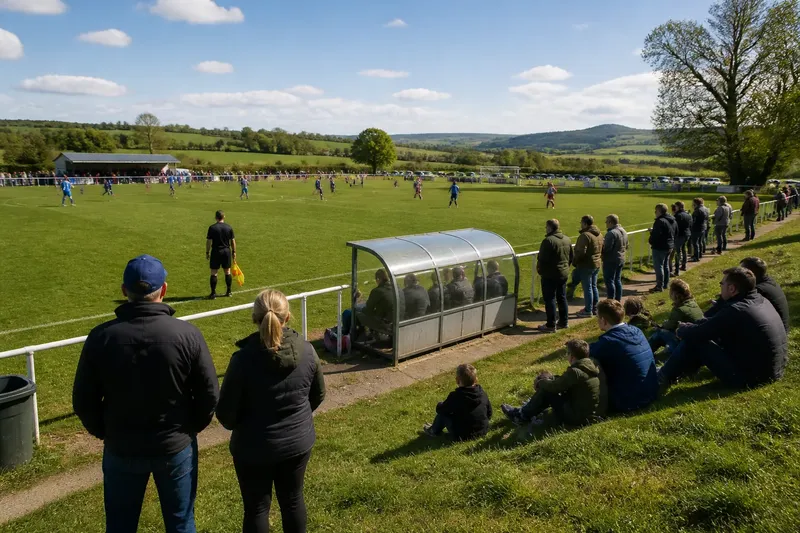
From Handwritten Fixture Board to Shared Calendar
See how a shared fixture calendar can keep a rural team informed while preserving the noticeboard’s familiar role as a public record of club life.
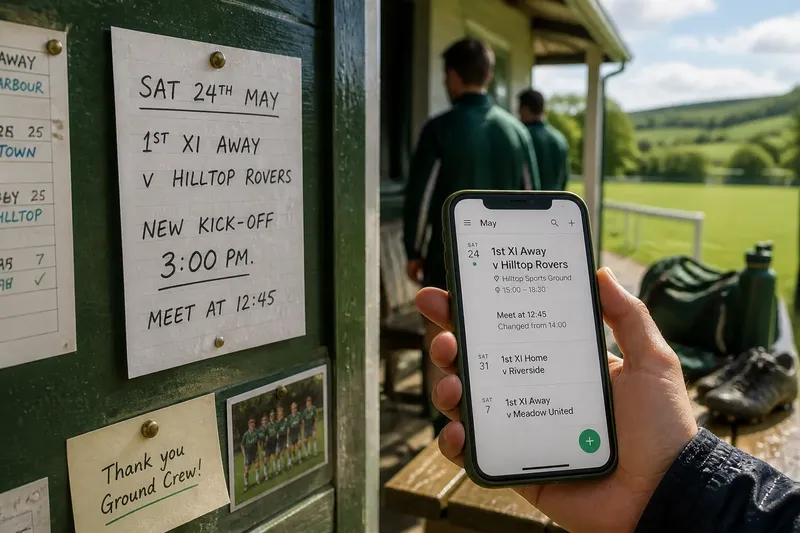
On a wet Thursday evening, a fixture secretary wipes rain from the clubhouse noticeboard and pins up a handwritten change: Saturday’s away match now starts later. By morning, some players have read it, others have already left for work, and one family is checking an old message on a phone. The shift from a handwritten fixture board to a shared calendar is about more than choosing a surface. It reflects how a rural club now keeps people connected across distances, work patterns, and different habits of getting information.
A digital calendar can make changes easier to carry, but it cannot replace the board’s public presence or the conversation beside it. A useful arrangement gives each format a clear job and a predictable routine. The board remains a visible club record; the shared calendar becomes the practical place to check current fixture details. The transition works best when nobody has to guess which one to trust.
What did the handwritten board do well?
The old board gathered the club into one place. A player arriving to collect kit could see the next fixture, a volunteer could spot a run of home games, and a visitor might notice the team’s name before anyone had formally introduced themselves. The writing was local and immediate: a familiar hand, a pinned note, perhaps a mark beside a match that needed confirming.
Its limits were also part of its character. A notice could be missed by anyone who did not pass the pavilion, and a change made after the board was updated might travel through phone calls or word of mouth. For a team spread across farms, villages, and shift patterns, one physical point could not reliably reach everyone. Still, the board offered context a list of dates alone might not: it showed that fixtures belonged to a shared place and a continuing club story.
That history is worth keeping without asking a paper surface to do a job it cannot do. The question is not whether the board was old-fashioned. It is how to preserve its familiar role while making current information easier to carry.
What changes when fixtures move to a shared calendar?
A shared calendar places fixture details where members can consult them away from the ground. Depending on the club’s setup, that may be a calendar shared through Google Calendar, an Outlook calendar, or a team-management app. Players can check a fixture on a phone; parents can add it to a household calendar; an organizer can update a venue without asking every member to remember a new piece of paper.
The main change is the route information takes. On a board, the person who updates the notice expects readers to come to it. In a shared calendar, readers may subscribe once and return when needed. That can make updates more convenient, but it also means people need to know how access works, which calendar is current, and whether they must refresh or accept an invitation.
Digital access is not universal, and convenience is personal. Someone may have patchy reception, an older phone, limited data, or simply prefer paper. A club can keep the calendar as its working source while retaining a concise board notice and a phone contact for members who need another route. The goal is shared understanding, not making every person use the same device.
How can a club make the change over one ordinary week?
A short transition can establish habits without turning the move into a major project. The club should first agree who maintains the calendar and how members will hear about changes. Then it can run both formats together briefly, making the relationship explicit rather than letting two competing records emerge.
- Early in the week: Choose one person or role to maintain the calendar, such as the fixture secretary. Confirm that the selected tool works for the people who will update it, not just for those who view it.
- Before the next fixture: Enter the details already confirmed by the league or organizer: date, start time, venue, and opponent. Mark uncertain information clearly rather than filling gaps with guesses.
- At training: Show members how to open the calendar and subscribe or save it. Put a simple note on the clubhouse board with the calendar name and a contact for anyone who cannot access it.
- When a change arrives: Update the calendar promptly, then use the club’s established direct channels for changes that matter to the imminent fixture. Do not assume that every member will see an alert.
- After the weekend: Ask whether anyone relied on an outdated detail or had trouble finding the current one. Adjust the instructions or access arrangement rather than adding another channel by default.
Say a small village team has a match moved from its usual ground to a neighboring club’s field. The fixture secretary changes the shared calendar, sends the agreed message to the team group, and pins a brief notice on the pavilion board. A player who checks the app sees the new venue; a member who comes to the clubhouse sees the same change. The useful result is not that everyone receives information in an identical way, but that the routes point to one current arrangement.
Who should be able to edit, and what belongs on the board?
Open editing may feel welcoming, yet it can also leave members unsure whether a change is official. Restricting edits to a named role or small group makes responsibility visible. Other members can report errors through a familiar contact, and the person maintaining the calendar can confirm changes before publishing them.
Keep calendar entries focused on information people need to attend: fixture, venue, start time, and a brief note about a change in arrangements. Detailed travel coordination, personal medical information, or private contact details belong elsewhere and should only be shared with appropriate consent. If the club uses a subscription link, check its access settings before posting it publicly; the club’s own policy and the app’s instructions determine the right arrangement.
The physical board can carry a different kind of information. A small display of the next few fixtures, handwritten results, or a note thanking the ground crew keeps the clubhouse rooted in its own routines. It does not need to reproduce every calendar entry. Its value lies partly in being seen by people who are already there.
What do members often ask about a shared fixture calendar?
Can a shared calendar replace the club noticeboard?
It can replace the board as the main working record of fixture details, but it need not replace the board’s public, local presence. Keeping a short notice at the ground helps members and visitors who do not use the calendar.
What if a player does not use a smartphone?
Offer a clear alternative, such as a printed fixture sheet, a direct phone call for urgent changes, or a regular check-in with the team contact. Agree on that route in advance so the person is not expected to discover changes by chance.
How should the club handle a late fixture change?
Update the shared calendar and send the change through the club’s agreed direct channel, such as a team message or phone tree. For a change close to departure, a direct confirmation is more dependable than relying on a calendar alert alone.
Should old fixtures stay in the calendar?
That depends on how the club uses its calendar. Past entries can help members recall a season’s pattern, while an uncluttered current view may be easier to scan; archive or hide older fixtures if the tool allows it.
How can the calendar preserve club memory?
A calendar can become more than a delivery system if the club treats it as a modest record. After a fixture, the secretary might add a short, neutral note about a venue change or a postponed match, especially when that detail will help with future scheduling. Results should be included only if the club has agreed that the calendar is an appropriate place for them.
The board’s handwritten marks and the calendar’s recurring entries tell different parts of the same story. One makes club life visible at the ground; the other lets the fixture travel with members. A rural club moving from a handwritten fixture board to a shared calendar does not have to choose between continuity and convenience. It can keep the board as a welcome sign and use the calendar as a dependable current record, with one named person responsible for keeping the two in step.
Before the next season begins, make the arrangement easy to explain in one sentence: where the current fixture lives, who updates it, and how members without digital access will hear about changes. If everyone can answer those questions, the calendar is doing its quiet work—and the old board can keep doing its own.