The Sightline from Touchline to Pitch
A clear view from the touchline starts with more than getting close. Compare height, angle, barriers, and likely movement before choosing a spot.
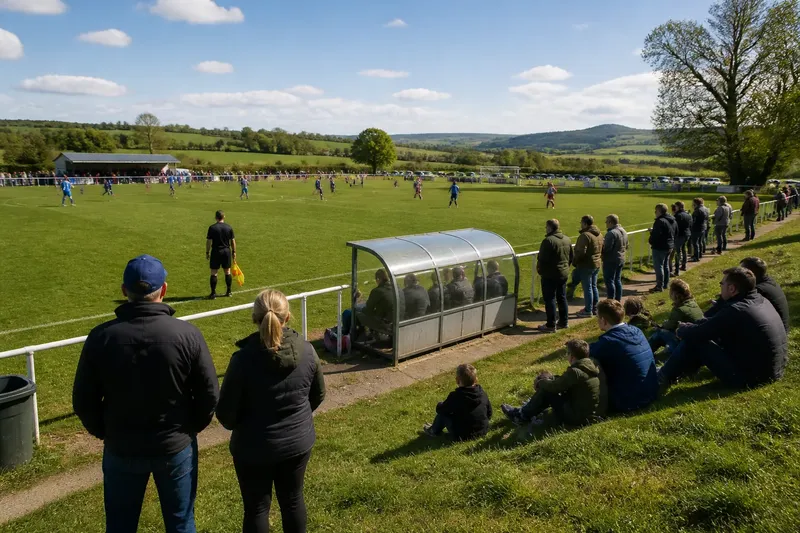
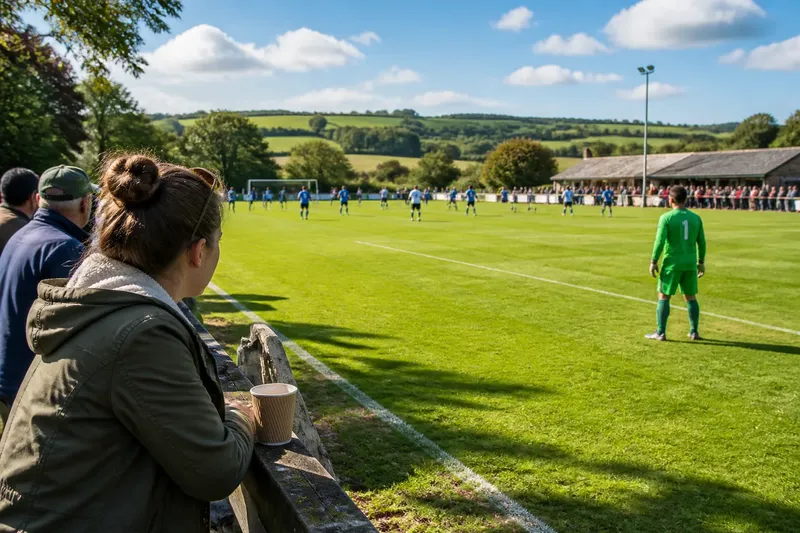
At a rural football ground, the near winger can disappear behind a line of parents, a low rail, and the dugout just as the ball reaches the corner. The sightline from touchline to pitch depends on where you stand, what sits between you and the action, and how the ground’s shape changes your view. A quick comparison before settling in can help you choose a spot where the play makes sense.
What makes a good sightline from touchline to pitch?
A good sightline lets you follow the ball and read the players’ positions without repeatedly shifting sideways or craning around an obstacle. It does not have to be the closest view. A place a little farther back, or slightly above the touchline, may show more of the pitch than a front-row spot at the rail.
Think about three things together: how much of the playing area is visible, how clearly you can distinguish people and the ball, and whether that view is likely to stay open. A gap between two spectators might offer a fine glimpse at first, but it is a fragile choice if everyone shifts when play moves down the line.
For a game with frequent changes of direction, seeing both the near and far sides helps you understand where play is developing. For a rugby match, you may also want to track movement across a broad area rather than focus only on the player carrying the ball. The useful view depends on the sport and what you enjoy watching.
Does standing closer always give you a better view?
No. Standing close makes players and ball easier to see when action is nearby, but the low angle can hide events on the far side. At a flat field, a person in front may block your view of the ball even when that person is not especially tall. From close to the touchline, you may also need to turn your head often as play travels from end to end.
A position set back from the boundary can reveal more of the pitch at once. If the ground has a gentle bank, its higher edge may provide a clearer view over spectators and equipment. The trade-off is that distant action can look smaller, and a bank’s slope or footing may not suit everyone.
Try thinking of closeness and coverage as separate qualities. If you want to feel near the action, choose a clear section of the touchline. If you want to follow team shape and movement across the field, look for a raised or less crowded position. Neither is automatically the right choice for every spectator.
How do fences, dugouts, and trees change what you can see?
Fixed objects can create blind spots that are easy to miss until play reaches them. A high perimeter fence may interrupt the view from low down; a dugout can hide the near touchline from one end; a tree trunk can block a narrow slice of the far side. Advertising boards, corner flags, and parked vehicles can matter too, especially at compact grounds where spectators gather close to the boundary.
Look beyond the object itself and notice what it hides. A fence across the far boundary may be a minor distraction if it sits behind play. A shelter that masks a corner or goalmouth may matter more if those areas are where you most want to watch. A small shift along the sideline can sometimes move an obstruction out of your line of sight.
People are moving obstructions as well. Coaches may stand near the technical area, substitutes may warm up along the edge, and spectators may cluster around a popular entrance. A spot that looks open before kickoff could become crowded once the match begins. It helps to notice where people are likely to gather, not only where they are standing at that moment.
How can you compare two possible places to watch?
Compare each spot against the same parts of the pitch instead of judging it by first impression. From each position, check whether you can see the near touchline, the far touchline, both ends, and the areas where players tend to gather. Then notice what blocks each view and whether you would need to lean, turn, or move to keep track of play.
Imagine you arrive at a village cricket ground and are choosing between the rope beside the square and a place on a low grassy bank. From the rope, you can see the batter clearly, but a group near the sight screen blocks part of the outfield. From the bank, the batter looks smaller, yet you can follow the bowler, fielders, and ball’s path with fewer interruptions. If your main interest is the contest at the crease, the rope may suit you; if you want to follow the whole field, the bank may be more useful.
That comparison is not a promise that either view will remain unchanged. It gives you a reasoned starting point, based on what you actually want to see and what the ground puts in the way.
What should you check before settling on a spot?
- Pitch coverage: Can you see both ends and most of the playing area from where you would stand or sit?
- Height: Would a slightly raised position clear the heads in front without making the action too distant?
- Obstructions: Do rails, dugouts, shelters, trees, or equipment hide a part of the field you care about?
- Likely crowd movement: Is the spot near an entrance, team area, or narrow path where people may collect?
- Viewing angle: Can you follow play across the field without repeatedly turning or leaning around someone?
- Comfort and access: Is the ground firm and suitable for you to stand or sit there for the match?
- Changing conditions: Could low sun, rain, or a change in where people gather make another position more comfortable?
Use the answers to narrow your choice, not to hunt for a flawless viewpoint. If two places are close, pick the one that keeps the areas you care about visible and leaves room to shift if the crowd changes.
What do spectators often ask about sightlines?
Is the halfway line the best place to watch?
It can give a balanced view of both ends, but the best position depends on the sport, ground layout, and your priorities. A halfway spot may be less useful if a dugout or crowd blocks the near side.
Should I stand behind the goal?
Behind a goal can make attacks at that end feel immediate, while offering a narrow view of play farther away. Consider it if you enjoy watching that end, but check whether you can follow action across the rest of the field.
Where should I sit if I want to watch team shape?
A position with a broad view, often set back or slightly above the touchline, can make spacing and movement easier to read. Try to see both sidelines and the full length of the playing area rather than choosing solely for proximity.
Can I change places during a match?
At many open grounds, moving to another public viewing area may be possible, but respect marked boundaries, team spaces, and other spectators. If access or seating is managed, ask a club volunteer where movement is appropriate.
When is a different viewing position worth choosing?
Move if a fixed obstruction hides the action you came to watch, if a crowd has closed your view, or if the angle is making the match hard to follow. A short move along the same touchline may be enough. At some grounds, a small change in height is more useful than walking to the opposite end.
Also consider what you value beyond a clear view. A place near familiar supporters may make a local fixture feel more welcoming; a quieter area may suit someone who wants to concentrate. Just keep paths, team areas, and access routes clear, and avoid crossing close to play.
The sightline from touchline to pitch is best judged against the match you want to watch, not an imagined perfect seat. Look across the field, check for the obstructions that matter, and choose the position that lets you follow the action comfortably. At a small ground, that simple pause can turn a patchy view into a much easier afternoon of watching.